Executive Strategy & Technical Execution
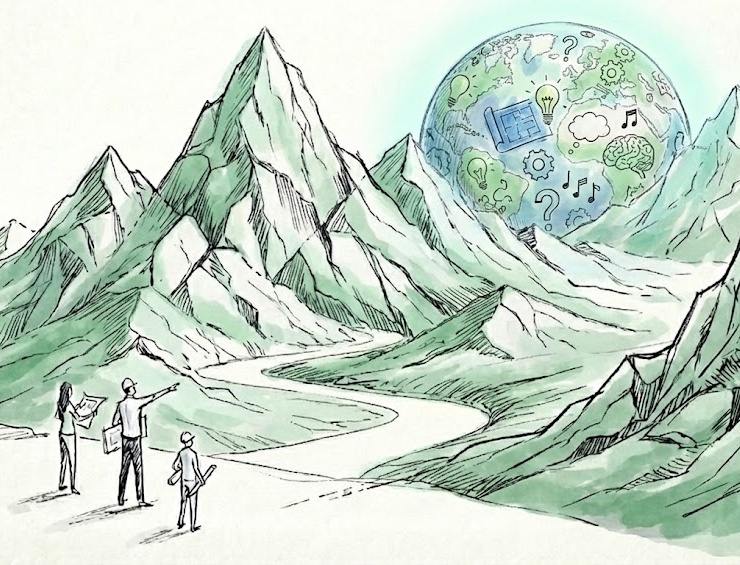
We help organisations - from non-profits to major enterprises - bridge the gap between having a vision and building the tools to achieve it. We don't just give advice; we help you create the strategy, build the technology, and measure the impact.
For Growing Organisations: We act as your temporary Chief AI & Technology Officer. We review your systems, fix security gaps, and manage your tech vendors to ensure you don't get oversold on expensive tools you don't need.
For New Projects: You have a bold new idea but aren't sure if it's possible. We build the first working version (prototype) to prove it works before you commit your full budget.
For Community, Academia & Government: We use data to solve real-world problems. Whether it's mapping climate resilience or improving city infrastructure, we turn complex data into clear evidence for decision-making.
We ensure every project answers three questions:
Can it actually be built? (Is it realistic?)
Does it help your mission? (Is it useful?)
Is it safe? (Is it ethical and secure?)
Our priority sectors are those tackling systemic challenges: climate resilience, urban design, community health & wellbeing, and public safety. We help non-profits, specialised firms, and research bodies navigate the intersection of complex data and human needs, ensuring your technology is as robust as your mission.
Climate adaptation failures are rarely a data problem. They are a coordination problem - between disciplines, between policy and practice, between the pace of scientific update and the cadence of institutional decision-making.
This project develops multi-agent AI systems designed to replicate that coordination at scale. Individual agents operate as domain specialists - each drawing on live APIs, continuously updated regulatory context, and authoritative scientific feeds. Orchestrated together, they function less like a tool and more like a standing technical advisory capability: available on demand, current by design, and able to synthesise across domains that rarely speak to one another in practice at this pace.
The work moves beyond static analysis toward systems that actively track shifting policy environments, flag emerging exposure, and support decision-makers with evidence that is both timely and tractable.
Active development. Selective collaborations considered.
The built environment sector - architecture, urban planning, infrastructure consulting, construction - is structurally late to AI adoption, yet uniquely exposed to its consequences. Firms in this space face a compressed window to determine where AI creates genuine leverage and where it introduces risk to practice, reputation, and margin.
This work examines how specialist firms can develop durable AI strategies: not vendor-led, not experimental for its own sake, but grounded in the operational realities of project-based professional services. The question is not whether to adopt AI, but how to compete and build long-term advantage without losing what makes these firms irreplaceable.
Selective engagements. Enquiries by introduction.
In collaboration with researchers at the University of New South Wales, this project explores the design and evaluation of AI-assisted decision-support tools for urban planning and property practitioners. The work asks a precise question: when a planner or designer is mid-process - navigating trade-offs across community need, policy constraint, and spatial evidence - what does a genuinely useful AI co-pilot actually do, how does it work, and what barriers face adoption?
The focus is on augmentation, not automation. The research draws on human-computer interaction, planning theory, and emerging agentic AI capability to prototype tools that extend practitioner expertise rather than bypass it.
Active research collaboration. Details available on request.
Democratic legitimacy in planning and infrastructure has always depended on meaningful public participation. AI changes the conditions for that participation - in how evidence is produced, how options are communicated, and increasingly, how community voices are synthesised and represented in decision-making.
This project builds on doctoral research in participatory analytics at UNSW and UCL to ask what participation should look like when AI is a substantive actor in the planning process. The work addresses both the methodological challenge - designing processes that remain genuinely inclusive - and the governance question of accountability when analytical outputs shape public outcomes.
Active development. Selective collaborations considered.
Spearheaded the build and commercialisation of MyAssist, Deloitte's flagship GenAI platform. Scaled the solution to over 13,000 staff, winning the 2024 Deloitte Innovation Award and driving the firm's transformation into an AI-fuelled organisation.
Led advanced spatial analysis for the GFDRR Innovation Labs. Harnessed global mobility data to shape climate resilience strategies and crisis response for developing nations across Latin America and Asia.
Directed consulting and algorithm R&D for Australia's premier mobility intelligence firm, processing 8 billion daily signals. Previously led spatial modelling for 70+ city-shaping infrastructure projects at Arup. Clients included federal, state, local, international government, NGOs, private sector and big tech companies.
Doctoral research at UNSW and UCL on making complex data and models more accessible to diverse stakeholders in major infrastructure decision-making. Focused on bridging the gap between technical rigour and public engagement in urban planning.
Young Smart Innovator of the Year. Asia Pacific Spatial Awards. GovHack finalist. ITS Australia nominations. Work cited over 750 times in academic literature. Recognised thought leader bridging technical excellence with strategic thinking and human-centred design.
Developed innovative approaches to measuring and improving urban livability. Created dashboard solutions for government agencies to assess sustainability and quality of life metrics, turning data science into actionable city planning tools.
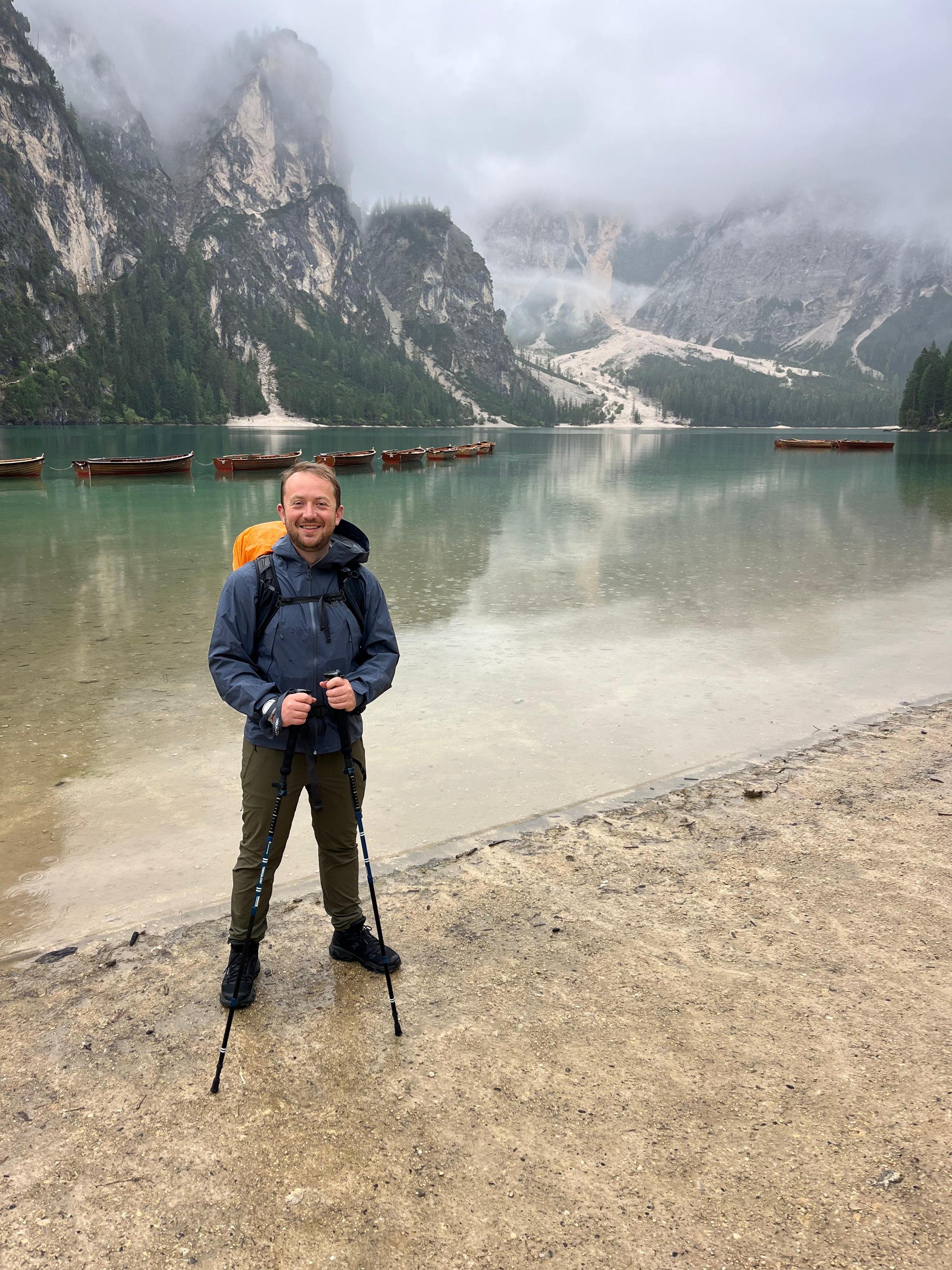
Dr. Oliver Lock is an AI leader and data scientist who bridges technology, government, and society to drive measurable change. Operating at the intersection of executive strategy and technical execution, Oliver helps organisations navigate the complexities of Artificial Intelligence, spatial analytics, and digital transformation.
— Let's Talk —
Book a 30-minute conversation to explore how Third Orbit can accelerate your next initiative.
Book a Time